
в чём отличие man от male
Man — человек в общем понимании слова (не по половой принадлежности).
Man — человек в узком понимании слова (по половой принадлежности), мужчина (более разумный представитель человеческого рода).
Man — в слэнге мужик, чувак, чув, пацан. Синоним body.
Male — означает конкретный пол, самец, мужская особь.
Male — в компьютерном слэнге разъём, имеющий штыри или иголки на Материнской плате (папка). Антоним — female — в компьютерном слэнге разъём, имеющий дырки или изолирующую окантовку вокруг контактов на Материнской плате (мамка).
Слова Man и Male, Woman и Female — разница и тонкости употребления
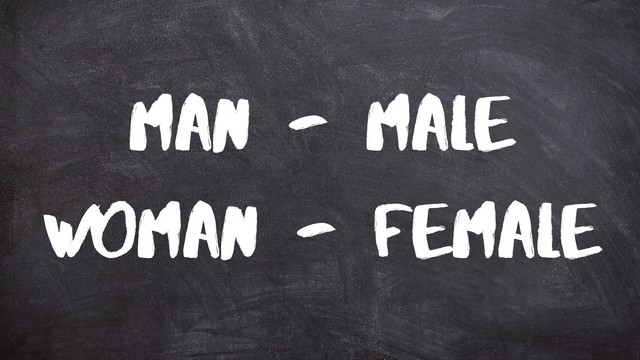
В английском языке, помимо слов man и woman — «мужчина» и «женщина», есть похожие по значению слова male и female, которые могут значить (это одно из значений) «самец» и «самка». Однако если в русском языке слова «самец» и «самка» используются только по отношению к животным, а по отношению к людям звучат оскорбительно, в английском языке слова male и female используются несколько иначе. Давайте разберем, как именно эти слова используют в английском.
Существительные Male и Female — применительно к животным и людям
Как существительные, male и female действительно значат «самец» и «самка» соответственно:
The male of the species is less aggressive. — Самец данного вида менее агрессивен.
The kitten was a female. — Котенок был самкой.
Однако Cambridge Dictionary определяет male как «a boy, man, or male animal», а female как «a female animal or person». То есть эти слова применимы не только к животным, но и людям, причем без всякой оскорбительной коннотации. В этом значении male и female встречается в формальной речи, например, в полицейском или научном отчете, в речи военнослужащих:
Thre are two unidentified males among the bodies. — Среди тел — двое неопознанных мужчин.
Females represent 40 percent of the country’s workforce. — Женщины представляют 40% трудового населения страны.
The suspect was a female. — Подозреваемая была женщиной.
They detained five people, three males, two females. — Они задержали пять человек, троих мужчин, двух женщин.
В обычной же, повседневной речи мужчин называют man, женщин — woman, а если говорят просто о каком-то человеке, то person (один человек) или people (несколько людей). Замечу, что слово persons как множественное число person существует, но звучит очень формально, в обычной речи используется редко.
What is the Difference Between Male and Man
The main difference between male and man is that male refers to any male organism, whereas man specifically refers to an adult male human being.
Male and man are two similar words that refer to one of the two sexes. Although they are similar words, there is a difference between them in terms of their usage. The opposite of male is female, while the opposite of man is woman.
Key Areas Covered
1. What Does Male Mean
– Definition, Meaning, Examples
2. What Does Man Mean
– Definition, Meaning, Examples
3. Difference Between Male and Man
– Comparison of Key Differences
Key Terms

What Does Male Mean
Male is a word that indicates the sex of animals and humans. It’s the opposite of female. Male organisms cannot sexually reproduce without access to at least one ovum from a female. Moreover, male mammals have a Y chromosome, which results in the production of testosterone to develop male reproductive organs. Furthermore, humans use the two terms male and female to discuss gender, which denotes the social and cultural differences between females and males. For example, the word male includes male animals, male voice, male reproduction, male population, etc.

The following example sentences will help you to understand the meaning and usage of this word more clearly.
A large male elephant roamed the village at night.
The construction industry is largely male-dominated.
It was difficult to identify whether it was a male or female.
Male lions are larger than female lions and have a big mane of hair around the neck.
The adult male population of the country was more susceptible to the disease.
Six male servants helped to carry their master’s palanquin.
All male animals of the herd were taken to a slaughterhouse.
What Does Man Mean
The word man refers to a male of the human species. In other words, a man is an adult male human being. The opposite word of man is woman. Moreover, the plural form of man is men. Also, it’s important to notice that we don’t use this word to refer to other male animals. It’s specifically reserved for male human beings. A younger male is known as a boy.
Moreover, biologically, men differ from women by their reproductive systems, which include organs like testicles, penis, sperm duct, prostate gland, and epididymis. Besides, traditionally, certain characteristics or personality traits, like strength, courage, bravery, independence, and leadership, are associated with men and masculinity.

It’s a man’s duty to provide for his family.
He was a very wealthy man, but he preferred to go everywhere by his motorbike.
She spotted a bold man staring at the children playing.
A young man ran to the burning house and came back with a box full of books.
I couldn’t understand why a grown man was acting like a little boy.
An old man with grey hair and a wrinkled face was sitting on the playground bench.
Difference Between Male and Man
Definition
Male is the sex that is opposite of female, while man is an adult male of the human species.
Usage of the Word
Male refers to any male organism, whereas man specifically refers to an adult male human being.
Opposite Words
The opposite of male is female, while the opposite of man is woman.
Conclusion
The opposite of male is female, while the opposite of man is woman. The main difference between male and man is that male refers to any male organism, whereas man specifically refers to an adult male human being.
Reference:
1. “Male.” Wikipedia. Wikipedia Foundation.
2. “Man.” Wikipedia. Wikipedia Foundation.
The difference between Male and Man
When used as nouns, male means a human member of the masculine sex or gender, whereas man means an adult male human.
Male is also adjective with the meaning: belonging to the sex which typically produces sperm, or to the gender which is typically associated with it.
Man is also verb with the meaning: to supply (something) with staff or crew (of either sex).
check bellow for the other definitions of Male and Man
Male as an adjective:
Belonging to the sex which typically produces sperm, or to the gender which is typically associated with it.
Examples:
"male writers'', ''the leading male and female singers'', ''a male bird feeding a seed to a female'', ''in bee colonies, all drones are male'', ''intersex male patients"
Male as an adjective:
Characteristic of this sex/gender. , .>>
Examples:
"stereotypically male interests'', ''an insect with typically male coloration"
Male as an adjective:
Tending to lead to or regulate the development of sexual characteristics typical of this sex.
Examples:
"the male chromosome''; ''like testes, ovaries also produce testosterone and some other male hormones"
Male as an adjective (grammar, less common than 'masculine'):
Masculine; of the masculine grammatical gender.
Male as an adjective (figuratively):
Of instruments, tools, or connectors: designed to fit into or penetrate a female counterpart, as in a connector, pipe fitting or laboratory glassware.
Male as a noun (sometimes, _, offensive):
One of the male (masculine) sex or gender. A human member of the masculine sex or gender. An animal of the sex that has testes. A plant of the masculine sex.
Man as a noun:
An adult male human.
Examples:
"The show is especially popular with middle-aged men."
Man as a noun (collective):
All human males collectively: mankind.
Man as a noun:
A human, a person of either gender, usually an adult.
Examples:
"every man for himself"
Man as a noun (collective):
All humans collectively: mankind, humankind, humanity.
Man as a noun (anthropology, archaeology, paleontology):
A member of the genus Homo, especially of the species Homo sapiens.
Man as a noun (obsolete):
A sentient being, whether human or supernatural.
Man as a noun:
An adult male who has, to an eminent degree, qualities considered masculine, such as strength, integrity, and devotion to family; a mensch.
Man as a noun (uncountable, obsolete, uncommon):
Manliness; the quality or state of being manly.
Man as a noun:
Man as a noun:
A lover; a boyfriend.
Man as a noun:
A male enthusiast or devotee; a male who is very fond of or devoted to a specified kind of thing.
Examples:
"Some people prefer apple pie, but me, I’m a cherry pie man."
Man as a noun:
A person, usually male, who has duties or skills associated with a specified thing.
Examples:
"I wanted to be a guitar man on a road tour, but instead I’m a flag man on a road crew."
Man as a noun:
A person, usually male, who can fulfill one's requirements with regard to a specified matter.
Man as a noun:
A male who belongs to a particular group: an employee, a student or alumnus, a representative, etc.
Man as a noun:
An adult male servant.
Man as a noun (historical):
A vassal. A subject.
Examples:
"Like master, like man. (old proverb)"
Man as a noun:
A piece or token used in board games such as chess.
Man as a noun (Multicultural London English, slang):
Man as a noun:
Examples:
"Come on, man, we've got no time to lose!"
Man as a noun:
A friendly term of address usually reserved for other adult males.
Examples:
Man as a noun (sports):
A player on whom another is playing, with the intent of limiting their attacking impact.
Man as an adjective:
Man as a verb (transitive):
To supply (something) with staff or crew (of either sex).
Examples:
"The ship was manned with a small crew."
Man as a verb (transitive):
To take up position in order to operate (something).
Examples:
"Man the machine guns!"
Man as a verb (reflexive, possibly, _, dated):
To brace (oneself), to fortify or steel (oneself) in a manly way.
Man as a verb (transitive, obsolete):
To wait on, attend to or escort.
Man as a verb (transitive, obsolete, chiefly, falconry):